|
1
|
- Asst.Prof.Dr.Denpong Soodphakdee
- Department of Mechanical Engineering
|
|
2
|
- Thermodynamics = Therme + dynamis
- Therme = heat
- Dynamis = power
- Thermodynamics is most descriptive of the early efforts to convert heat
to power.
|
|
3
|
|
|
4
|
- Any physical quantit:y can be characterized by dimensions.
- The arbitrary magnitudes assigned to the dimensions are called units.
- Primary (fundamental) dimensions :- basic dimension such as mass, length,
time, and temperature
- Secondary (derived) dimensions :- dimensions that expressed in term of
primary dimensions
|
|
5
|
- Two systems of units that are widely used in engineering are the British
Gravitational (BG) System and the International System (SI).
- British Gravitational System (BG)
- Length (foot, ft), Time (second, s), Force (pound, lb),
Temperature (Fahrenheit °F, Rankine °R)
- International System (SI)
- Length (meter, m), Time (second, s),
mass (kilogram, kg), Temperature (Kelvin, K)
- When solving problems it is important to use a consistent system of
units, e.g., don’t mix BG and SI units
|
|
6
|
|
|
7
|
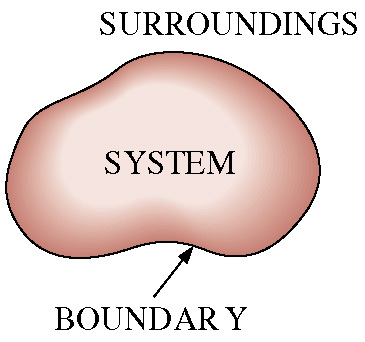
- System :- a quantity of matter or a region in space chosen for study
- Surroundings :- the mass or region outside the system
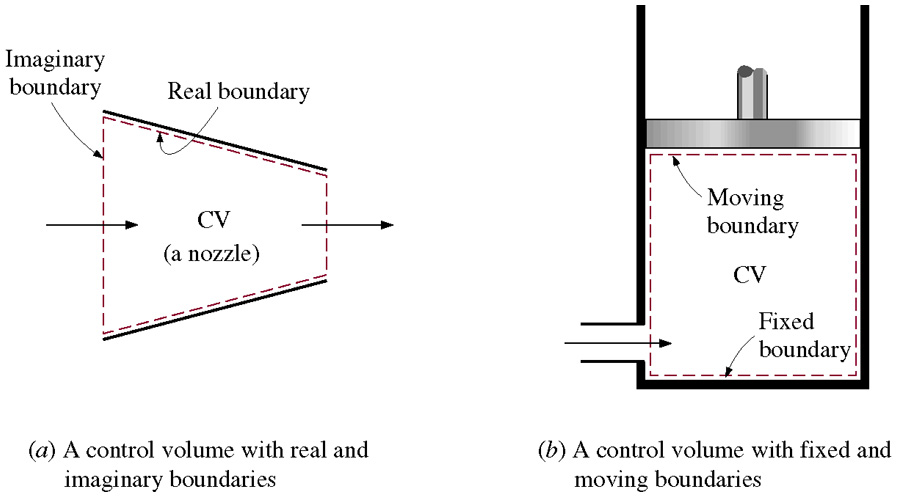
- Boundary :- the real or imaginary surface that separates the system
from its surroundings
|
|
8
|
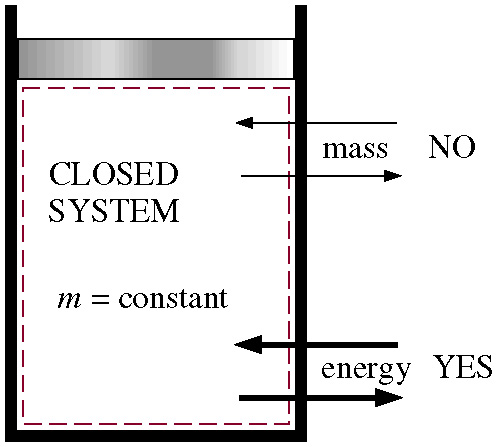
- Consist of a fixed amount of mass
- No mass can cross its boundary
- Energy, in form of heat and work, can cross the boundary
- Also called isolated system
|
|
9
|
- A properly selected region in space.
- It usually encloses a device that involves mass flow such as a
compressor, turbine, nozzle.
|
|
10
|
- Density, r :- mass per unit volume
- Specific volume, v :- volume per unit mass
- Specific gravity, SG :- the ratio of the density of a substance to the
density of some standard substance at a specified temperature
- Intensive properties :- independent of the size of the system
- Extensive properties :- depend on the size of thesystem
|
|
11
|
- State :- a set of properties that completely describes the condition
- Equilibrium :- a state of balance, no unbalance potential in the system
- Thermal equilibrium, T = const.
- Mechanical equilibrium, P = const.
- Phase equilibrium
- Chemical equilibrium
|
|
12
|
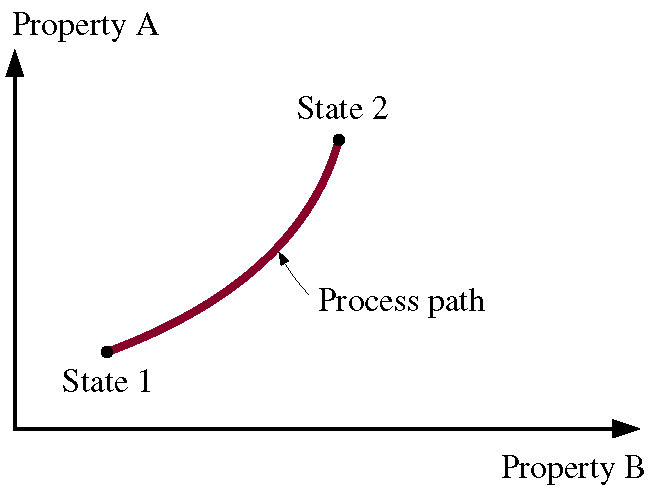
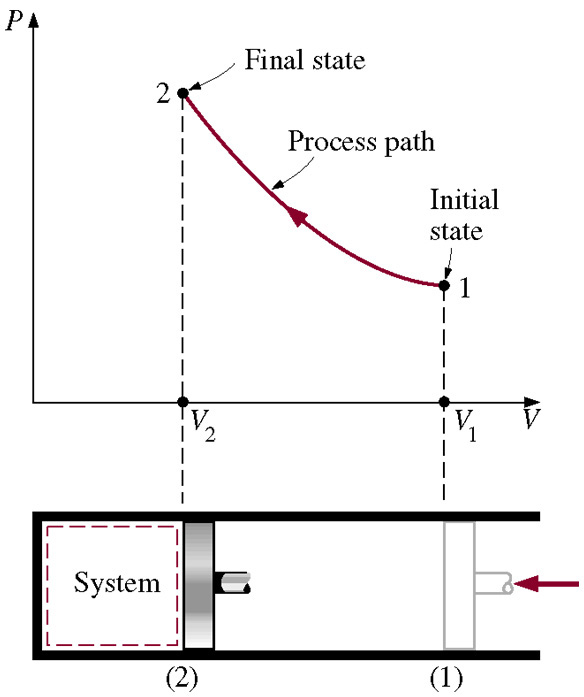
- System undergoes from one equilibrium state to another.
|
|
13
|
- Iso-Process
- Isothermal process
T = constant
- Isobaric process
P = constant
- Isochoric process
v = constant
- Cycle
- System undergoes and return to the initial state at the end of processes
|
|
14
|
- Steady :- no change with time
- Uniform :- no change with location
- Steady-flow process :- a process during which a fluid flows through a
control volume steadily.
|
|
15
|
- Thermal, mechanical, kinetic, potential, electric, magnetic, chemical,
and nuclear
- Total energy, E :- sum of all energy of the system
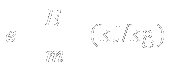
- Total energy per unit mass, e
|
|
16
|
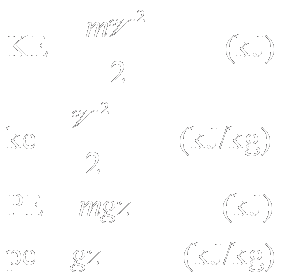
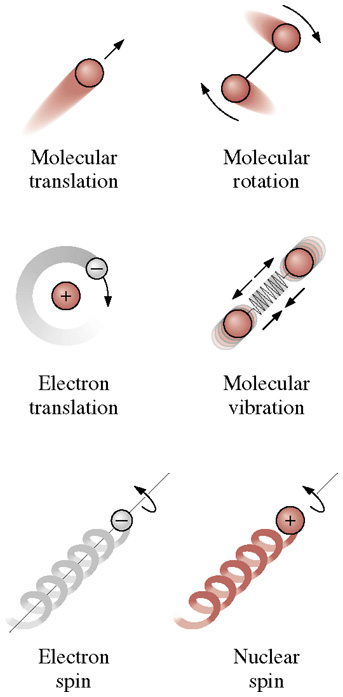
- Macroscopic energy :- consider energy as a whole of system such as
kinetic and potential energy.
- Microscopic energy :- relate to the molecular structure of a system and
degree of molecular activity
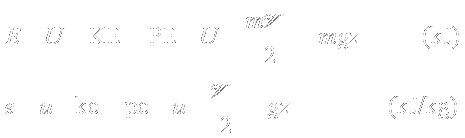
- Internal energy, U :- sum of macroscopic energy and microscopic energy
|
|
17
|
|
|
18
|
- The magnetic, electric, and surface tension effects can be ignored in
most systems.
|
|
19
|
- Sensible energy
- Latent energy
- Chemical energy
- Nuclear energy
|
|
20
|
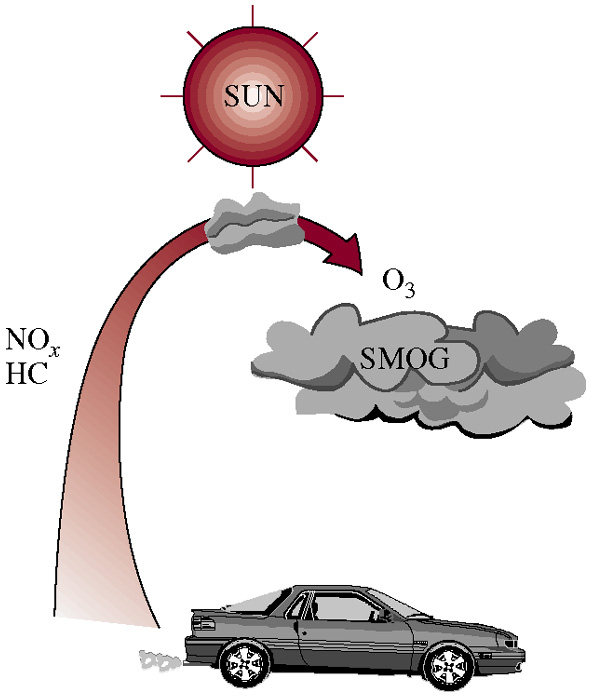
- Ground-level ozone, which is the primary component of smog, forms when
HC and NOx react in the presence of sunlight in hot calm days.
|
|
21
|
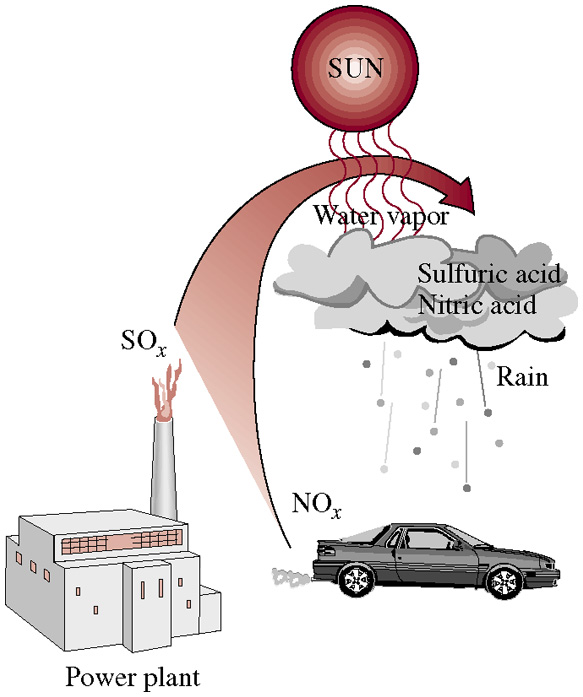
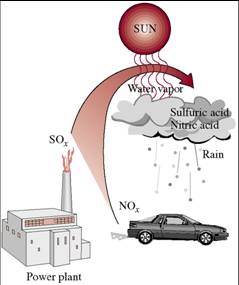
- Sulfuric acid and nitric acid are formed when sulfur oxides and nitric
oxides react with water vapor and other chemicals high in the atmosphere
in the presence of sunlight.
|
|
22
|
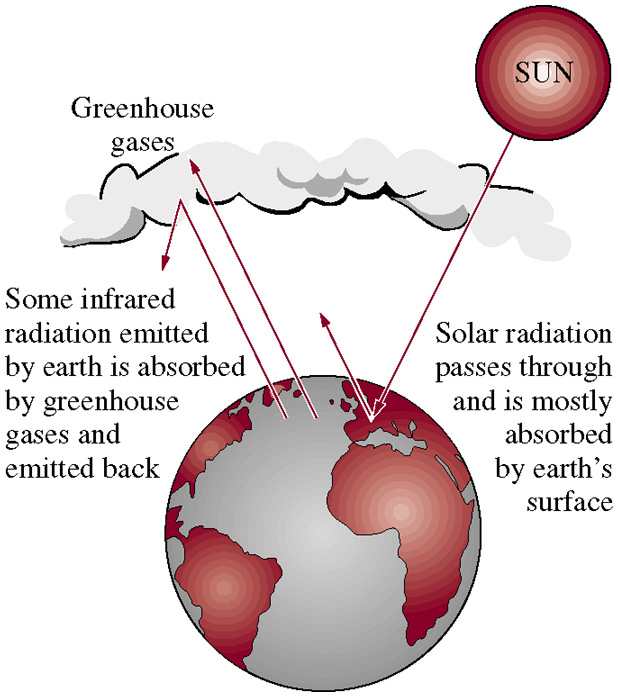
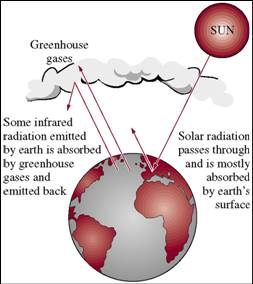
- The greenhouse effect on earth.
|
|
23
|
- A measure of hotness and coldness.
- Hard to have an exact definition.
- Heat is transfer from the body at higher temperature to the one at lower
temperature.
- At the point, where two bodies attain sam temperature, heat transfer
stops called thermal equilibrium.
|
|
24
|
- If two bodies are in thermal equilibrium with the third body, they are
also in thermal equilibrium with each other.
- Two bodies are in thermal equilibrium if both have the same temperature
reading even if they are not in contact.
|
|
25
|
- Celsius and Fahrenheit are scales that based on some easily reproducible
states of a substance.
- Temperature scale that independent for any state of any substance or
substances is called thermodynamic temperature scale.
- Kelvin and Rankine are thermodynamic temperature scales.
|
|
26
|
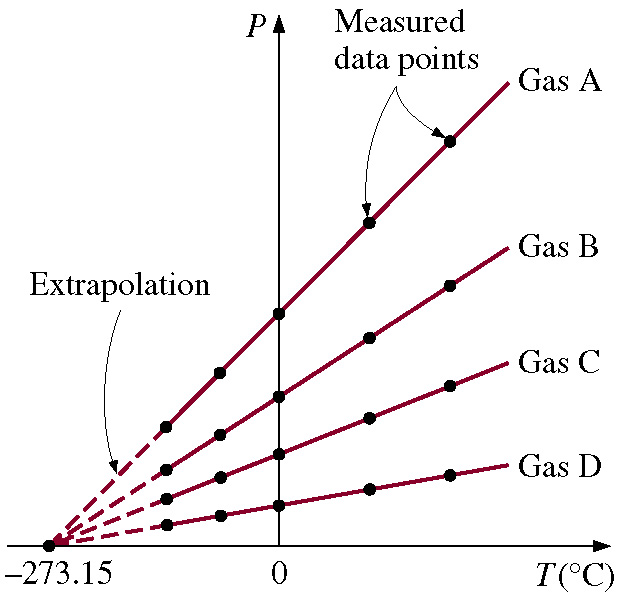
- P versus T plots of the experimental data obtained from a
constant-volume gas thermometer using four different gases at different
(but low) pressures.
|
|
27
|
- Comparison of temperature scale
|
|
28
|
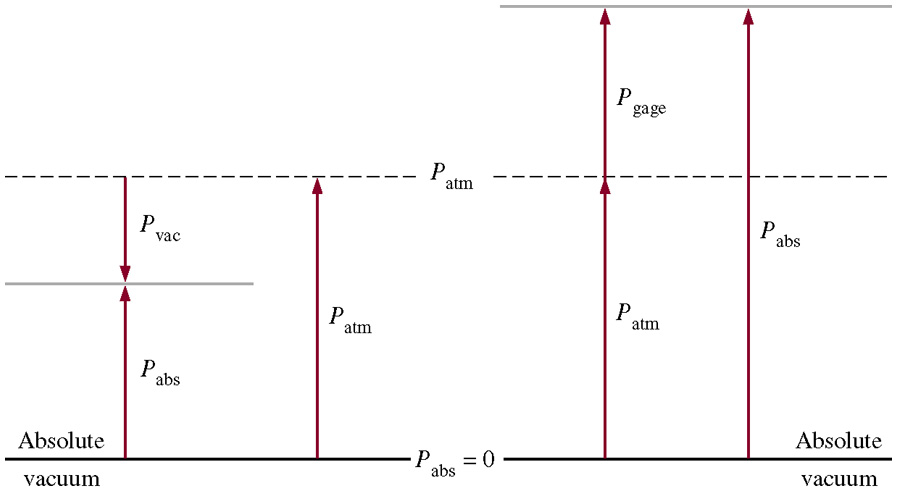
- Pressure :- the force exerted by a fluid per unit area
|
|
29
|
|
|
30
|
|

 Notes
Notes